
Everything Is Pink and Nothing Hurts
The infantilization of women online

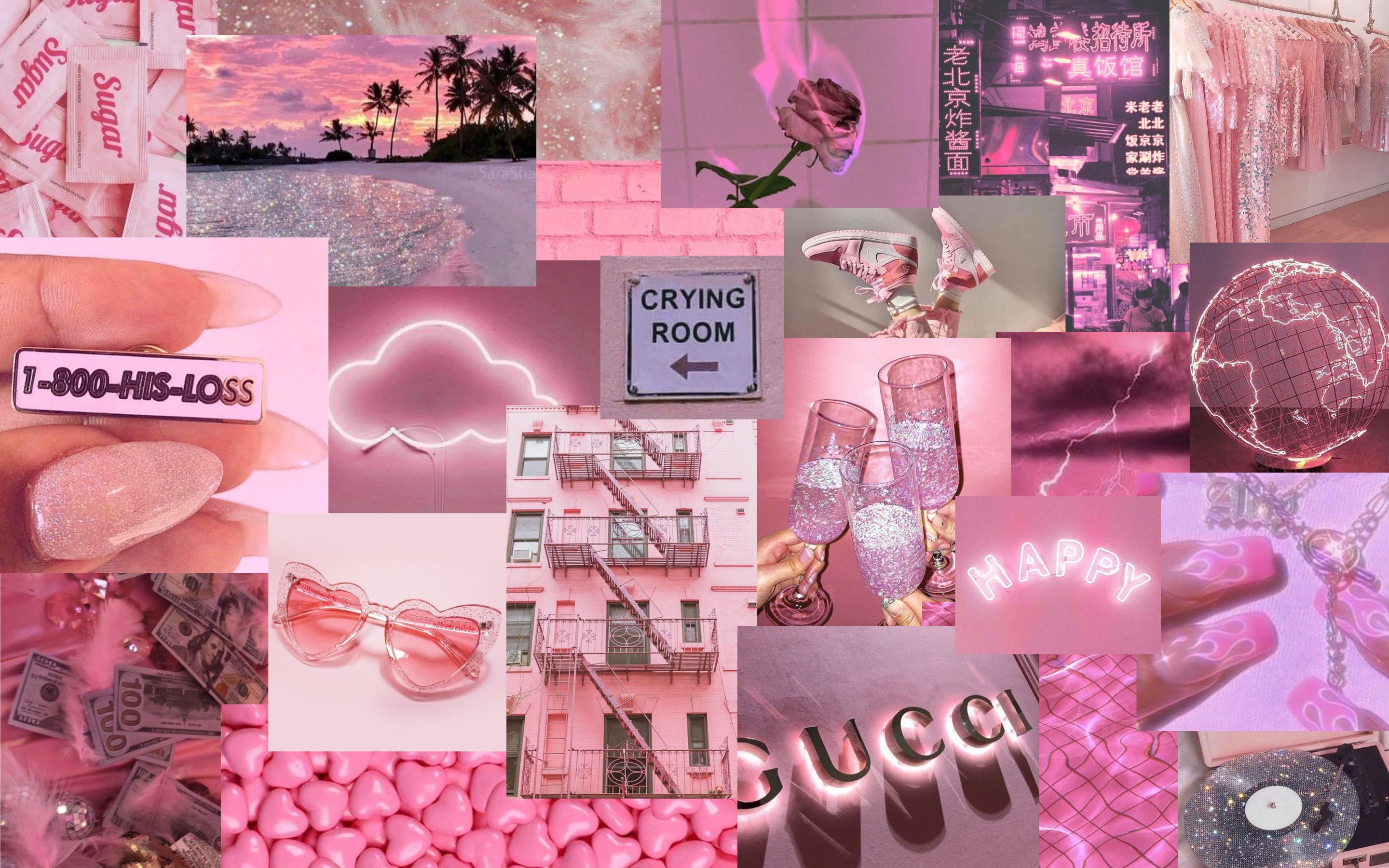
At some point in the last few years, girl stopped meaning young female human and started meaning… something else entirely. It became a punchline. A survival strategy. A way to soften the sharp edges of womanhood until they felt more digestible. More harmless. More… pink.
Lately, it feels like we’ve lost the plot on what it means to be an adult woman.
Not in terms of responsibilities—we still have plenty of those. But in how we talk about ourselves. In how we frame hunger, ambition, failure, loneliness, exhaustion. More and more, it’s filtered through the language of girlhood.
Not woman. Not even young woman. Just… girl.
The tone may be playful, even ironic—but it’s still doing the same thing: taking real adult experiences and shrinking them into something cuter, smaller, and easier to swallow.
Somewhere along the way, we started using girl to make grown-up things feel less heavy. Less serious. Less worthy of scrutiny. And in doing so, we didn’t just soften the language—we erased something with weight.
From girlboss to girlfailure
I’ve written before about The Rise of the Aesthetic Girl—how TikTok archetypes like clean girl or tomato girl reflect a kind of identity slot machine, where we trade personality for marketable mood board. But if aesthetic girlhood is about how we look, internet girlhood is more about how we frame ourselves.
And it starts with the girlboss (RIP).
She was supposed to be empowering. A new kind of woman—one who could crush a pitch, land the account, run a company. She was ready to lean in and grind with the best of them. But crucially, she’d do it as a girl. Not a woman. Not a boss. A girlboss (one word).
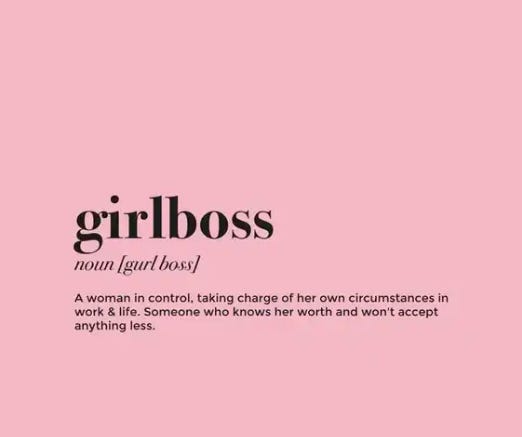
It sounds trite now, but that prefix mattered. It didn’t just soften her power—it styled it in a very specific way. She owned the boardroom and did it in heels. She was ambitious, but not cold. The girlboss could be intimidating, but it had to be the right kind of intimidating: the hot kind. The charismatic, magnetic, don’t mess with me but also maybe you want to be me? kind. That specific version of ambition was allowed, as long as it was aspirational and appealing.
Eventually, the girlboss became a meme. The burnout caught up, and the illusion cracked. Turns out hustling isn’t liberating. Burnout isn’t aspirational. And maybe “having it all” was just a new way to keep women doing too much.
What emerged in her place wasn’t another power fantasy—in fact, quite the opposite.
Enter: the girlfailure.
The girlfailure started as a fandom term, defined as “a fictional girl (or woman) who is endearingly pathetic or inept.” Read: she’s a mess. She’s overwhelmed. She can’t do her taxes. She accidentally slept through her 10 a.m. meeting and then cried in a CVS. And it’s so endearing!
But this fictional archetype quickly turned into something real. Someone relatable. You root for her not because she’s winning—but because she’s spiraling in a way that feels familiar. Articles like Why ‘girlfailure’ is the anti-girlboss trend we can all relate to started popping up, cheerfully framing this collapse as cathartic. The logic seems to be: if ambition burned us out, then self-sabotage must be empowering. Because girlfailure sounds so much more adorable than emotional breakdown due to late-stage capitalism.
Thanks to girlfailure, you no longer had to succeed like a man—you could fail like a girl. And that was somehow… fine. Expected. Understandable.
We went from women trying to have it all to girls pretending we never wanted to.
Just a girlie
Somewhere in the wreckage of hustle culture and girlboss fatigue, another shift took place. Adult women—full-grown, high-functioning, professionally competent women—started calling themselves girlies. And not just ironically. Not just for the bit. It became the default:
“Hi book girlies.”
“Tech girlies, what’s the best standing desk?”
“Dinner recs for the tired girlies who don’t want to cook?”
It’s soft. It’s playful. It’s the verbal equivalent of rounding your corners. And the subtext is always the same: I need help. I’m just a girlie!
This kind of language is cutesy, self-aware, and everywhere. Girl dinner. Girl math. Girl jobs. Because woman sounds too heavy. Girl is easier to like. It makes you sound like you’re just here to look pretty, not here to lead.
And yeah, sometimes it’s tongue-in-cheek. But it’s also a pattern—a way of making real adult problems easier to laugh at, easier to share, and easier to ignore.
Girl dinner isn’t just a funny little plate of snacks—it’s often a symptom of disordered eating or decision fatigue. Girl math reframes financial anxiety as a silly miscalculation. Girl jobs are low-paid roles that require emotional labor. Lazy girl hacks are for women who are mentally and physically drained but have to keep performing functionality.
And I’ll admit: I’m guilty of it, too. I’ve called my friends the girlies. I’ve made girl math jokes at work. I don’t know why exactly—I definitely roll my eyes when someone else says girl math—but I’ve done it. Maybe I want to seem like I’m in on the joke. Like I’m not reinforcing it, I’m laughing at it.
In the moment, it doesn’t feel like self-erasure. It feels harmless. But when you zoom out, you start to see the shape of it. The way it flattens adulthood into something easier to dismiss.
Maybe that’s the trap.
I don’t think we say these things because we want to be smaller. But I do think we say them because the world taught us it’s safer when we are.
Peak pinkification
Somewhere along the way, girlhood stopped meaning girlhood.
It no longer refers to a developmental stage or a specific lived experience. Instead, it’s become a floating aesthetic—a curated mood made of lip gloss, iced lattes, sticker-covered journals, fuzzy socks, a cutout of Harry Styles, someone crying on the floor in a pink hoodie.
We’ve reached a point where adult identity is being reframed through objects. Girlhood, as it’s used online, now just means anything that makes you feel cute, vulnerable, or comforted. And it’s almost always pink.
Not that pink is the problem. But when a color becomes the stand-in for an entire phase of life—or worse, a way to opt out of one—it gets weird.
There are endless posts now that start, “Girlhood is…” followed by a picture of a Diet Coke or a claw clip.
And then there’s the other kind of post—the kind that tries to make girlhood emotional. That’s where it gets even messier.
“Girlhood is talking for hours and not fixing anything.”
“Girlhood is making bracelets and crying.”
“Girlhood is the way your best friend texts ‘home?’ after a night out.”
That’s not girlhood. That’s female friendship. That’s women showing up for each other as women.
By branding it as “girlhood,” we minimize it. We imply it’s fleeting. Childlike. We strip it of its depth and its grown-woman complexity.
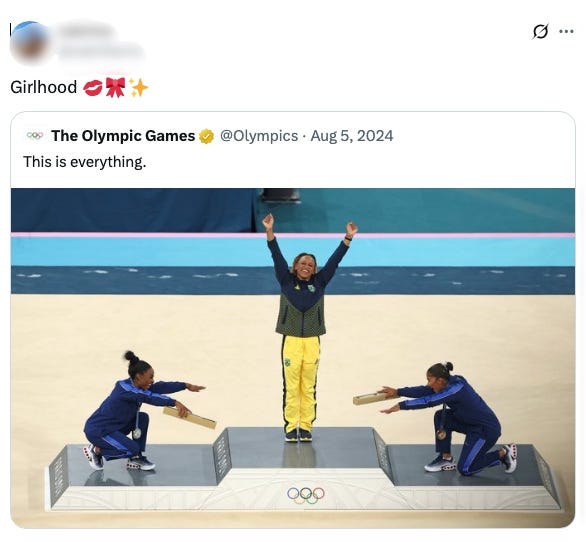
Even moments of great achievement get filtered through this lens of sweetness. When the U.S. women’s gymnastics team posted a photo at the 2024 Olympics, social media flooded with one word: girlhood. News outlets quickly rode the trend, calling the games “peak girlhood” because of the sparkle, the camaraderie, the fangirling.
But what we were actually looking at wasn’t peak girlhood—it was elite athleticism. Discipline. Grit. Grown women doing extraordinary things and celebrating each other for it. And still, the instinct was to shrink it. To make it cute.
That’s the trap of this language. It feels warm and safe and familiar. But it also keeps us from calling things what they are. It turns womanhood—and female friendships—into something unserious. And it tells us that the best way to be powerful is to pretend we’re not.
Let grown-ass women be grown
It’s easy to brush this off as harmless—just language, just jokes, just girlies being silly online. I’ve been told that women can take things too seriously. But there’s a pattern here, and it’s getting harder to ignore.
We don’t say boy dinner. We don’t talk about boy math, or boy jobs, or boyfailure. Adult men are allowed to just… be adults. They don’t have to repackage their exhaustion as a punchline or their loneliness as a meme. They don’t have to make their competence feel unthreatening. They don’t have to take their success, their friendships, their ambition and make them cutesy.
Women, on the other hand, are expected to soften the edges. To take anything sharp—grief, ambition, exhaustion, pride, joy—and run it through a pink filter. Because if it’s girlhood, it’s not a threat. If it’s girlhood, it doesn’t matter.
But I’m not a girl. I’m a woman in my 40s with a career I care about and friendships that have lasted decades. I have dreams, disappointments, fears, wins, days when I feel powerful, and days when I absolutely don’t. I want to be taken seriously—and I want other women to be taken seriously, too.
There’s nothing wrong with being soft. Or playful. Or pink. I love iced lattes and lip gloss. But when we wrap the complexity of womanhood in bubble wrap, we lose something. The texture. The weight. The truth of who we are.
So, maybe it’s time to retire the idea of girlhood unless you’re an actual, you know, girl. Because adulthood may be hard, but it isn’t something to apologize for. And being a woman should be celebrated.