
Everlane, Shein, and the Myth of the Better Brand
Conscious consumerism was never going to save us

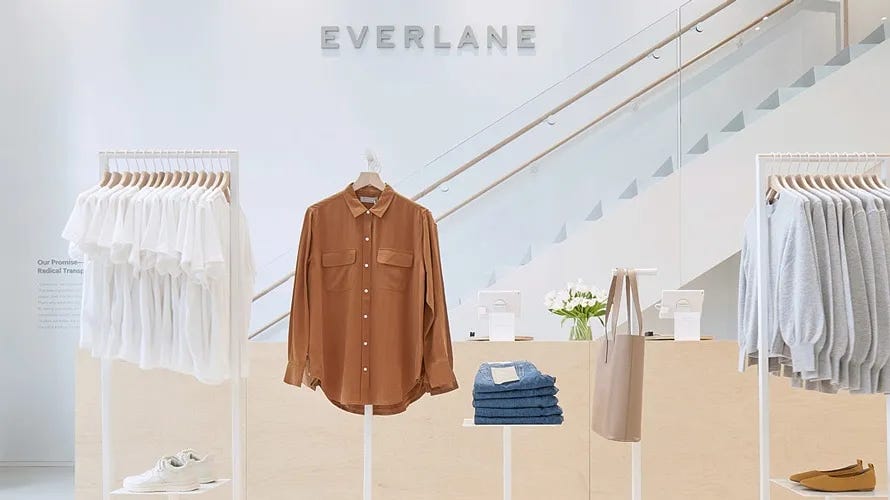
Everlane is being acquired by Shein, which is one of those sentences that feels engineered in a lab to make a specific kind of millennial woman stare blankly into the middle distance.
If you came of age online during the rise of direct-to-consumer brands, Everlane meant something very specific. It was not just a place to buy tasteful basics—it was part of a movement built around the idea that owning fewer, well-made items could create the perfect capsule wardrobe, and that the perfect capsule wardrobe could turn you into the kind of person who is ethical, minimalist, and effortlessly chic.
I was never an Everlane loyalist. The clothes were usually a little too expensive for me to buy casually—I’m not going to pay more than $100 for what is essentially a cotton pullover sweater and consider it some kind of investment piece. But I’m nothing if not a girl who loves a well-fitted T-shirt, and I appreciated what Everlane seemed to represent: a slightly better way to buy things in an industry built on waste.
That was the point of Everlane’s whole brand. Its “radical transparency” model was built around showing customers what products cost to make, including materials, labor, transportation, and markup. You weren’t just buying a nice pair of jeans. You were buying from a company willing to show its work.
That’s what makes the Shein acquisition so jarring. Shein is not just another big retailer—it’s one of the defining companies of ultra-fast fashion, a model based on low prices, constant inventory churn, and a speed of production that makes traditional fast fashion look almost restrained (not a compliment). Its reputation has been shaped by repeated criticism over poor labor conditions and damaging environmental impact. Also the ads—they are relentless, you know?
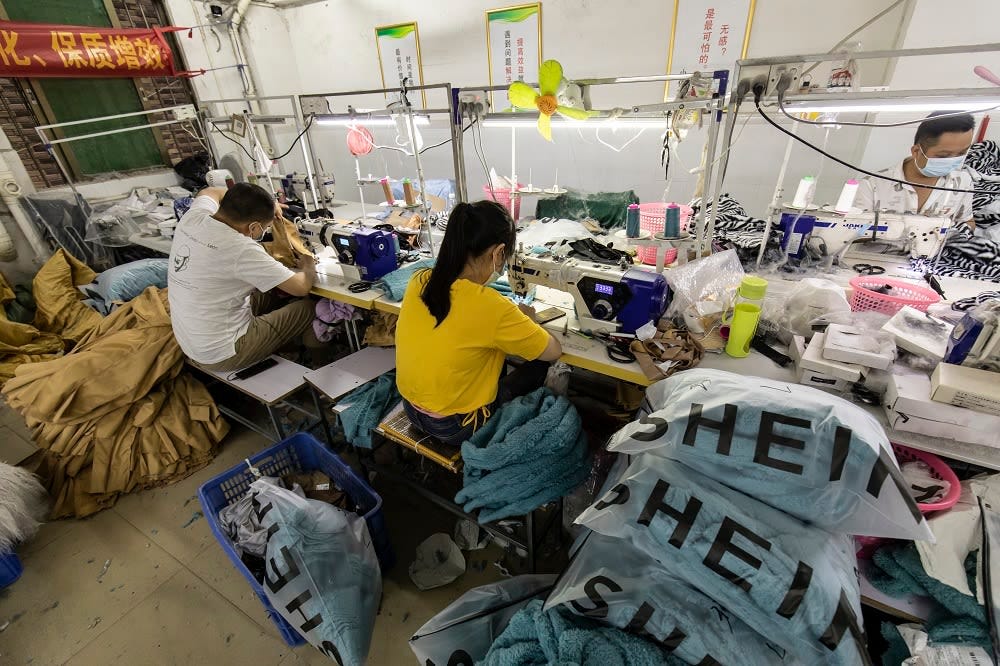
It just feels weird. I’m not naive and I know Everlane isn’t perfect. I didn’t think one brand was making a heroic dent in climate change because it could explain the cost of a cashmere sweater. Everlane is still a company, and like every company, it exists to sell things. But there is something specifically grim about watching a brand that built its identity around “better” consumption get absorbed by the poster child for disposability.
Unfortunately, this is just another example in a long line of business stories that dispel the myth of conscious consumerism: the idea that if we researched hard enough, cared enough, and bought the right things from the right places, we could somehow shop around the damage.
Conscious consumerism doesn’t just tell us what to buy—it tells us how to buy correctly. Every purchase becomes a referendum on who we are. Are you ethical? Informed? Complicit? Do you support sustainability or workers’ rights? Did you check the fabric composition before you added to cart? Did you research the parent company? I’m sure there’s a Reddit thread with a thorough comparison of every brand and a TikTok from someone named Madison who “used to work in fashion” that can help you decide whether your expensive button-down is morally superior to the button-down that looks exactly like it at Target.
At a certain point, shopping started to feel like taking the LSAT.
Naturally, women have been expected to carry a lot of this burden. We’re already trained to make consumption look like care: care for our homes, our bodies, our families, the planet, the invisible workers who made our jeans, the future, the turtles, the aesthetic, the budget. If we spend too much, we’re frivolous, but if we spend too little, we’re enabling exploitation. And if we opt out entirely, we still somehow need pants.
The thing is, the more responsibility gets pushed onto individual consumers, the less responsibility belongs to the systems that actually create the problem. If I buy the wrong shirt, I am the problem. If I buy the right shirt from the wrong brand, I am the problem. If I can’t afford the better option, I am the problem.
It’s not that I don’t care about workers or turtles, or that I think it’s silly to care where things come from. I’m not suggesting we all shrug and say, “Well, the system is broken, so I guess I’ll buy five polyester dresses and let the microplastics figure themselves out.” The point is that personal choices are not a substitute for corporate accountability, labor protections, regulation, or consequences. Consumers should not need a research fellowship to buy a pair of underwear without accidentally supporting the thing they are trying to avoid.
But brands know we want relief from the guilt of buying things. We want our choices to matter, and for the things we own to represent our values. This is how transparency and minimalism become selling points. Capitalizing on our guilt can be profitable—until it isn’t. Then I guess you sell off to Shein.
I don’t know why this particular acquisition feels so grim. I don’t think it’s because of Everlane itself, although I’m deeply disappointed. It’s more because it reinforces my suspicion that our purchasing choices don’t actually matter, or at least that they don’t matter enough to protect us from the systems we’re trying not to feed.
But I also know that it’s almost impossible to be profitable and fully sustainable in today’s world. It’s expensive to be green, both as a company and as a consumer. That’s why the Everlanes of the world all seem to crash, burn, and sell out to the titans of fast fashion. Even Shein, for all its dominance, has seen its valuation fall from $100 billion in 2022 to around $30 billion amid regulatory scrutiny. Apparently, the system is even bad for the companies winning at it, which feels almost poetic until you remember that it’s depressing.
Maybe conscious consumerism was always partly a marketing ploy. Maybe it was a lack of innovation and real investment in sustainability. Or maybe the millennial buyers once so committed to the trend simply can’t afford to care anymore. Whatever the reason, it’s hard not to look at this acquisition and wonder if the future of “ethical” shopping is less about finding the perfect brand and more about accepting that sometimes the most responsible option is a secondhand T-shirt on Poshmark.

If this post made you think, laugh, or want to text a friend, I’d love a heart. Or share it with someone you think would love it. It helps grow this weird, wonderful thing we’ve got going here 💕
And you can always…
💬 Leave a comment—I’d love your thoughts!
✍🏻 Check out my most popular posts
✨ Follow me on Instagram or Threads
📚 Become my friend on Goodreads
☕ Buy me a coffee here